


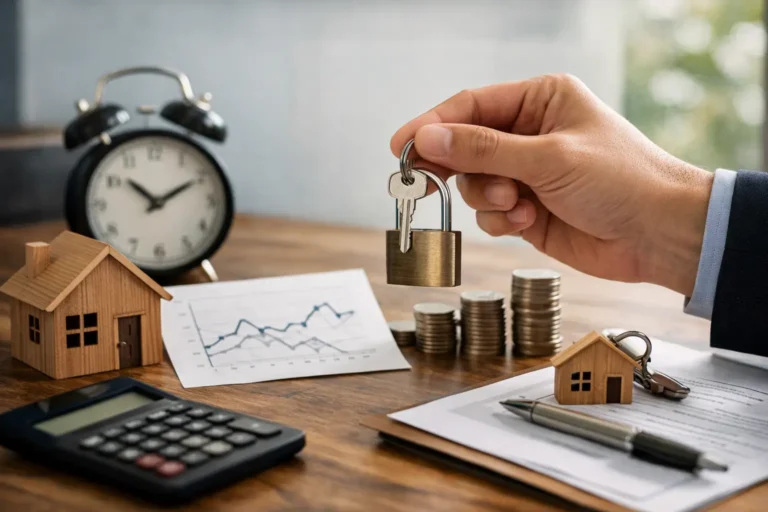
A home can feel like the right fit on Saturday and still be weeks away from closing. That gap is why buyers ask, when should buyers lock rates? The answer is rarely “the minute you get preapproved” or “wait until the last possible day.” A smart rate-lock decision is tied to your contract, loan progress, closing timeline, and comfort with risk.
For buyers across the Coastal Carolinas, the goal is not to guess where mortgage rates will go next. The goal is to protect a home payment you can comfortably manage while keeping the transaction moving toward a timely closing.
What a Mortgage Rate Lock Actually Does
A rate lock is a lender’s commitment to hold a specific interest rate and certain loan terms for a set period, often 30, 45, or 60 days. If market rates rise while your lock is active, your agreed-upon rate generally stays in place. If rates fall, your ability to benefit depends on the lender’s policies and whether you have a float-down option.
A lock is not the same as final loan approval. Your lender will still need to verify income, assets, credit, the property appraisal, title work, and other conditions. Think of the lock as protecting one major part of your financing while the rest of the loan file works its way to the finish line.
The exact terms matter. Buyers should ask whether the lock includes the loan program, points or lender credits, expected closing date, and any conditions that could require the loan to be restructured. A change in loan type, occupancy, property type, down payment, or closing date can affect the original terms.
When Should Buyers Lock Rates During a Purchase?
For most buyers, the strongest time to consider locking is after the home is under contract and the lender has enough verified information to provide reliable loan terms. At that point, you know the property, the target closing date, and the basic structure of the loan. That turns a general market conversation into a decision based on your actual purchase.
Many contracts in South Carolina and North Carolina can close within 30 to 45 days, although new construction, condo reviews, repair negotiations, appraisal issues, and relocation logistics can extend that schedule. A 30-day lock may work well for a clean, conventional transaction that is already moving quickly. A longer lock can make more sense when the closing window is less certain.
The best decision is not always the shortest lock available. A shorter period may have more favorable terms, but it gives you less room for delays. A longer lock can provide breathing room, especially when several moving parts are still being finalized. Buyers should weigh the potential savings of a shorter lock against the stress and possible expense of needing an extension.
Lock Early When Payment Certainty Matters Most
If the projected monthly payment works for your budget and protects the cash you need for your down payment, closing funds, moving expenses, and reserves, locking can be the disciplined choice. This is especially true for first-time buyers who are already stretching to reach a comfortable monthly payment, or for buyers coordinating the sale of another home.
Waiting for a slightly better rate can be tempting, but mortgage markets can move quickly. A small change in rate can affect purchasing power, required cash, or the payment you planned around. If a higher rate would make you uncomfortable, that is a strong signal to prioritize certainty.
Locking sooner can also be wise when the closing date is firm, the appraisal is scheduled, and your loan documents are progressing without major questions. In that situation, the transaction may be far enough along that protecting the rate is more valuable than trying to time the market.
Consider Waiting Only If You Can Handle the Risk
Some buyers choose to float, meaning they wait before locking. That can work when the closing date is still far away, the loan details are not ready, or the buyer has enough financial flexibility to absorb an increase if rates move the wrong direction.
Floating is a risk decision, not a prediction contest. It may be reasonable if your lender is monitoring the file closely, your budget has room, and you understand that rates can rise without warning. It is less suitable if you need every part of the payment to remain within a narrow range.
Avoid making the choice based solely on a headline, a social media post, or a friend’s rate from months ago. Your available rate depends on your loan program, credit profile, down payment, occupancy, property type, and lender terms on that specific day.
Match the Lock Period to the Real Closing Timeline
A rate lock should cover the expected closing date with a practical cushion. That cushion is particularly valuable when the purchase involves conditions outside the buyer’s direct control, such as an appraisal, title issue, insurance requirement, condo document review, or new-construction completion date.
Ask your lender and real estate team to work backward from closing. When will the appraisal be completed? When are final documents expected? Is there a repair item or property condition that could affect the schedule? Does the seller need extra time to move? A realistic timeline makes it easier to select a lock period that fits the transaction rather than hoping every deadline lands perfectly.
New-construction buyers need to be especially careful. A builder’s projected completion date is useful, but construction can be affected by inspections, materials, weather, permitting, and final utility work. Locking too early for a home that is still months from completion can create unnecessary extension risk. In many cases, the lender can discuss longer lock options or a strategy for locking closer to the projected finish date.
Vacation-home and investment-property purchases also deserve extra attention. These loans can have documentation requirements that differ from a primary residence, and buyers should confirm the timeline before choosing a lock period.
Questions to Ask Before You Lock
Before authorizing a lock, get clear answers in writing. You do not need to become a mortgage expert, but you do need to know what you are agreeing to. Ask your lender these questions:
- What is the exact rate, annual percentage rate, loan term, and expected monthly principal and interest payment?
- How long is the lock valid, and what is the scheduled expiration date?
- Does the lock cover the current target closing date with enough cushion?
- What happens if the closing is delayed, and what are the extension options?
- Is there a float-down option if market rates improve before closing?
- What changes to my loan file or the property could require updated terms?
Also confirm that you are comfortable with the full housing payment, including property taxes, homeowners insurance, mortgage insurance if applicable, and any homeowners association dues. The interest rate is meaningful, but your complete monthly obligation is what needs to fit your household plan.
Don’t Let the Rate Decision Distract From Loan Readiness
A lock protects a rate, not a buyer from changes in their own financial situation. Once you are under contract, keep your financial profile steady. Do not open new credit accounts, finance furniture or a vehicle, make large undocumented deposits, change jobs without consulting your lender, or move money between accounts without retaining a clear paper trail.
Respond quickly when the lender requests documents. Delays often come from missing bank statements, outdated pay stubs, unexplained deposits, or incomplete insurance information. Fast, accurate responses give the lender the best chance to meet the scheduled closing and reduce pressure on the lock timeline.
Your real estate agent should also be part of the communication loop. If an appraisal appointment moves, inspections reveal an issue, or the seller requests a closing-date change, the lender needs to know promptly. A coordinated team can address timeline concerns before they become last-minute problems.
A Practical Way to Make the Call
The right question is not, “Will rates be better next week?” No one can answer that with certainty. A better question is, “If rates move higher before closing, am I still comfortable with the payment and loan terms?” If the answer is no, locking is often the prudent move once your lender confirms the file is ready.
The Chrzanowski Team at Realty One Group helps buyers connect the property timeline, contract deadlines, and financing conversations so decisions are made with clear information. Sharon’s mortgage background brings added perspective to a step that can feel confusing when you are also managing inspections, moving plans, and lender requests.
Your home purchase should not hinge on a last-minute guess. When the payment works, the loan details are verified, and the closing timeline supports the lock period, choosing certainty can be one of the calmest decisions you make on the path to closing.
